| |
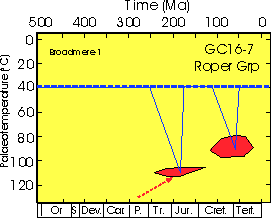
- AFTA thermal history solutions (solid path) for Roper Group
sample GC16-7. The red fields show the AFTA-derived time temperature
constraints.
- Cooling from paleotemperatures of >105°C beginning some
time in the early Triassic to Early Cretaceous (240-125 Ma). With
cooling from a lower peak in palaeotemperatures of 80 to 95°C
beginning some time in the Early Cretaceous to Miocene (115 to
20 Ma).
- The dashed blue path shows the Default Thermal History for
this sample.
- The red dashed arrow shows an alternative thermal history path
that is also compatible with the data.
|
| |
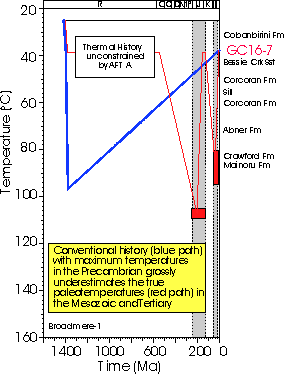
- Schematic illustration of the thermal history of Roper Group
sample GC16-7 derived from the AFTA results compared with a thermal
history commonly used to explain the organic maturity results
in this area of the McArthur Basin.
- It is clear that AFTA provides a significant improvement in
the understanding of the hydrocarbon generation history at Broadmere-1,
unavailable from other techniques.
|
| |
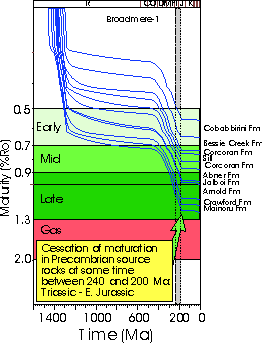
- This figure shows variation of maturity with time for Broadmere-1
derived from the reconstructed thermal history illustrated in
the above Figure.
- The grey columns represent the two major thermal episodes revealed
by AFTA. The figure shows cessation of active source rock maturation
throughout the entire Proterozoic section at 180 Ma (240-200Ma
allowed by AFTA) due to cooling as a response to significant (2000m)
uplift and erosion associated with the Fitzroy movement.
- The subsequent thermal episodes have no effect on the source
rock maturation history anywhere in the section, as palaeotemperatures
were less than those during the Middle Triassic-Middle Jurassic.
|